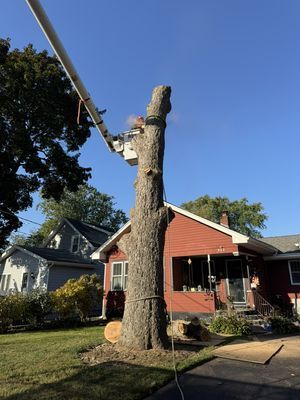
Stump Grinding 101: What to Expect, How Deep It Goes, and How to Prepare Your Yard
Stump Grinding 101: What to Expect, How Deep It Goes, and How to Prepare Your Yard
By Frank’s Tree Service — your trusted leader in tree removal and stump solutions for nearly 30 years
You finally had the tree removed, and now you’re left with the stubborn reminder: the stump. Maybe it’s right in the middle of the yard where you want grass to grow again. Maybe it’s near the driveway where you keep tripping over it. Or maybe it’s attracting bugs, sprouting new shoots, and making the whole property feel unfinished. That’s where stump grinding comes in.
At Frank’s Tree Service, we’ve helped homeowners and property managers solve stump problems for nearly 30 years. We’ve seen what works, what causes headaches, and what makes the process smooth. This guide will walk you through exactly what to expect during stump grinding, how deep stump grinding typically goes, and what you can do to prepare your yard so you get the best result with the least stress.
What Is Stump Grinding (And What It Isn’t)?
Stump grinding is the process of mechanically grinding a tree stump down below ground level using a specialized machine called a stump grinder. The grinder uses a powerful rotating wheel with cutting teeth to chip the stump into small wood fragments.
It’s important to understand what stump grinding does and doesn’t do:
Stump grinding removes the visible stump and grinds it down below the surface so you can reclaim the space for grass, landscaping, or hardscaping.
Stump grinding typically does not remove the entire root system. Most roots remain in the ground and gradually decompose over time. This is often a good thing: full root removal can be more disruptive, more expensive, and can tear up lawns, sidewalks, and nearby landscaping.
Why Homeowners Choose Stump Grinding
A stump may look harmless, but it can cause real issues over time. Here are the most common reasons people call us:
1) Safety and usability
Stumps are tripping hazards for kids, guests, and anyone mowing the yard. They also make it harder to use the space for playsets, patios, gardens, or clean landscaping.
2) Cleaner curb appeal
A stump can make the entire yard look unfinished—even if the tree removal itself was done correctly. Grinding finishes the job.
3) Easier lawn care
Mowing around a stump is a pain. One wrong bump and you can damage mower blades or send debris flying.
4) Pest reduction
Old stumps can attract insects and other pests as the wood starts to break down. One statistic to know: termites cause an estimated $5 billion in property damage each year in the United States. While that doesn’t mean every stump leads to termites, decaying wood can create a more inviting environment for unwanted pests.
5) Preventing unwanted regrowth
Some tree species can try to sprout again from the stump or root system. Grinding reduces that likelihood and helps you move on from the tree completely.
What to Expect During the Stump Grinding Process
Homeowners often imagine stump grinding as a huge excavation. In reality, stump grinding is usually a controlled, efficient process when it’s done by experienced professionals with the right equipment.
Here’s what typically happens:
Step 1: Site assessment and safety planning
Before any machine starts, a professional crew checks the stump location, access points, and what’s nearby—fences, utilities, landscaping, stones, and structures. This step matters because stump grinding can throw wood chips and debris, and the machine needs stable positioning.
Step 2: Protecting the surrounding area
Depending on the location, we may set up protective barriers and plan a safe grinding angle. If the stump is close to a structure, a driveway, a deck, or delicate landscaping, we work carefully to protect what’s around it.
Step 3: Grinding begins
The stump grinder is brought into position, and the rotating cutting wheel slowly chips away at the stump. The operator moves the cutting wheel back and forth, shaving the wood down a little at a time.
The result looks like a mound of wood chips—because that’s essentially what it becomes.
Step 4: Depth and final pass
Once the stump is ground to the requested depth, the operator will make finishing passes to ensure the area is even and ready for the next step (soil, seed, sod, or landscaping).
Step 5: Cleanup options
Cleanup can vary by service package and your plans for the area. Some customers want the chips left as mulch, others want them hauled away, and some want the hole backfilled with topsoil.
How Deep Does Stump Grinding Go?
This is one of the most common questions we get—and the answer depends on what you want to do with the area afterward.
Typical stump grinding depth. For most residential needs, stump grinding is performed several inches below ground level so you can level the area and grow grass over it.
If you’re planning to install sod, build a patio, pour concrete, or plant something new in the same spot, you may want the stump ground deeper. Deeper grinding helps avoid future settling and makes room for fresh soil.
What about the roots?
Even with deep grinding, major roots still remain and decompose over time. That decomposition can cause slight settling in the area later, depending on the tree species, root size, and soil conditions. A good plan for backfill and leveling helps reduce long-term dips.
The key takeaway: The “right” depth is based on your goal—grass, garden, replanting, or construction. A professional can recommend the best depth based on your property and plans.
What Happens to the Wood Chips?
During stump grinding, the stump turns into a mix of:
- Wood chips
- Sawdust-like material
- Soil mixed in as the grinder goes below ground
You have a few options:
Option A: Use chips as mulch (often a great choice)
Wood chips can be used in garden beds or around trees and shrubs. They help with moisture retention and weed suppression.
Option B: Remove chips and backfill with soil
If you want the area to look like a clean lawn again, removal and backfill is usually the best route. Wood chips left in the hole can absorb nitrogen as they break down, which can make it harder to grow thick grass right away.
Option C: A mix of both
Some homeowners keep a portion of chips for mulch and remove the rest.
If you’re not sure what’s best, tell your stump grinding crew what your end goal is—lawn, landscaping, or construction—and they can help you choose a smart approach.
How to Prepare Your Yard for Stump Grinding
A little preparation can make the job faster, safer, and more cost-effective. Here’s what you can do before your appointment.
1) Clear the area around the stump
Move anything near the stump that could get hit by flying chips or block machine access, such as:
- Patio furniture
- Kids’ toys
- Planters
- Decorative rocks
- Hoses and sprinklers
- Lawn ornaments
As a rule of thumb, clear a wide working space around the stump so the crew can maneuver safely.
2) Identify underground utilities (important!)
Stump grinding goes below the surface. If there are irrigation lines, invisible dog fences, landscape lighting, or utility lines near the stump, make sure they’re identified ahead of time.
Even if the stump is in a simple lawn area, utilities can surprise people—especially on older properties where lines may have been added over the years.
3) Keep pets and kids inside
Stump grinding involves heavy equipment and debris. For everyone’s safety, keep children and pets indoors or well away from the work zone.
4) Consider access: gates, fences, and narrow spaces
If the stump is in a backyard, check your gate width and clear a path. If access is limited, let the crew know—there are different equipment sizes available depending on the site.
5) Decide what you want done afterward
Think about what you want the area to become:
- New grass?
- A mulch bed?
- A patio or walkway?
- A new tree planted somewhere nearby?
Knowing your plan helps determine the right grinding depth and cleanup approach.
What You Should Not Do
If you’re tempted to handle the stump yourself, you’re not alone. But stump removal can go wrong quickly without the proper training and equipment.
Avoid these common mistakes:
- Digging aggressively around the stump (this can damage irrigation lines and create a bigger mess)
- Using chemicals without a plan (they can take a long time and may not deliver the clean result you want)
- Burning stumps (this can be dangerous, may violate local rules, and can damage surrounding roots, soil, or structures)
- Renting a stump grinder without experience (these machines are powerful and require careful handling)
Professional stump grinding is usually faster, cleaner, and safer—especially when the stump is near a driveway, fence, tree line, or landscaping.
How Long Does Stump Grinding Take?
Most standard residential stumps can be ground in a relatively short time once the crew is set up. Larger stumps, multiple stumps, or difficult access conditions can increase the time.
Factors that affect duration include:
- Stump diameter
- Tree species (some woods grind harder than others)
- Root flare size
- Soil conditions
- Rocks or debris in the ground
- Access limitations
A professional estimate typically accounts for these factors so you’re not surprised on the day of service.
A Real Testimony From the Yard
We believe trust is earned—one job at a time. Here’s what one customer told us after their stump grinding service:
“Frank’s Tree Service made the whole process easy. The stump was gone fast, the crew was respectful of our property, and they left the area cleaner than I expected. We finally have our yard back.”
That’s the outcome we aim for every time: simple, professional, and done right.
Why Frank’s Tree Service Is the Go-To for Stump Grinding
Stump grinding looks straightforward, but the difference is in the details: proper depth, clean finishes, safe operation around structures, and a plan for what comes next.
With nearly 30 years leading the way in tree removal and stump solutions, Frank’s Tree Service brings the experience and equipment to handle stumps safely and efficiently—whether it’s a small backyard stump or a bigger challenge near landscaping or hardscape.
Ready to Remove That Stump for Good?
If you’re tired of looking at a stump—or tired of working around it—let’s take care of it.
For a free quote, reach out to Frank’s Tree Service at https://www.frankstreeservice.net/
You have not enough Humanizer words left. Upgrade your Surfer plan.